
In this article
To take off a drone in a sandy or grassy location, start by finding a clean, flat and stable surface. The choice of take-off point affects propeller clearance, exposure to debris and the possibility of landing afterwards. A landing pad can help, but only when it is properly placed and the entire location is suitable.
Choose the location before unpacking the equipment
Walk around the area and identify people, animals, obstacles and paths. Consider how the location may change during the flight: an empty space now may become a well-used route within a few minutes. Also set aside an alternative landing area that does not depend on hurrying people out of the way.
Check the geographical zones and applicable rules before setting up the drone. The deserted appearance of a beach or piece of land does not prove that flying is permitted. See our guide to flight zones in Portugal and check the official information for the location and date.
Sand: reduce exposure to loose particles
In the Mini 4 Pro safety guidelines, DJI warns about sand entering the drone when taking off on beaches or in deserts. The document also recommends open areas and caution around reflective surfaces that may limit the vision system. These warnings refer to the model indicated; consult your drone’s guidelines.
Choose a point away from sand being blown around by the wind or kicked up by people. A clean base can separate the equipment from the ground, but it does not protect against particles already circulating in the air. If sand is visibly being carried by the wind near the equipment, move to another location or postpone the flight.
Do not place the drone on an unstable bag, a loose lid or a lightweight sheet. An improvised support may move just as the motors start. Stability must be ensured before you switch on the equipment.
Grass: check the height and clearance
Inspect the area the propellers will occupy with the arms extended. Grass, branches and leaves may be close to moving parts even when the drone’s body appears to be well supported. Avoid trying to resolve this by starting the motors to see whether the equipment can take off.
Look for a suitable surface nearby or use a base that fits the space available. If you need to prop up a corner or hold the support in place to keep it level, you do not yet have a stable take-off point.
How to assess a landing pad
Place it on the ground and check that it remains flat. Make sure there are no raised edges near the propellers and that the base does not slip. If the product specifies how it should be secured, follow the relevant instructions and keep the fastening elements away from moving parts.
The pad must suit the equipment and the location. Do not assume a universal minimum size without checking the model. A base with visible markings also does not guarantee an exact automatic landing on it.
Before starting the motors
- Check that there is clear space around and above the drone.
- Check the arms and propellers, and remove the transport guards.
- Read the warnings displayed in the app.
- Check the return point and the intended landing area.
- Move people away and keep your attention on the equipment.
The open category described by EASA has specific conditions concerning people and visual contact. Choosing a good surface does not exempt you from complying with those conditions.
After landing
Wait for the moving parts to stop and switch off the equipment before retrieving it. Check for obvious dirt, marks or anything caught near the motors. Do not continue using a motor that is making an unusual noise in an attempt to expel sand; document the symptom and ask the manufacturer for guidance.
Do not use a hand launch or catch as an improvised solution for poor terrain. Choose a suitable point and follow the procedure in the manual. To prepare for the flight, see the pre-flight checklist, the guide to automatic return configuration and the sensor warning diagnosis.
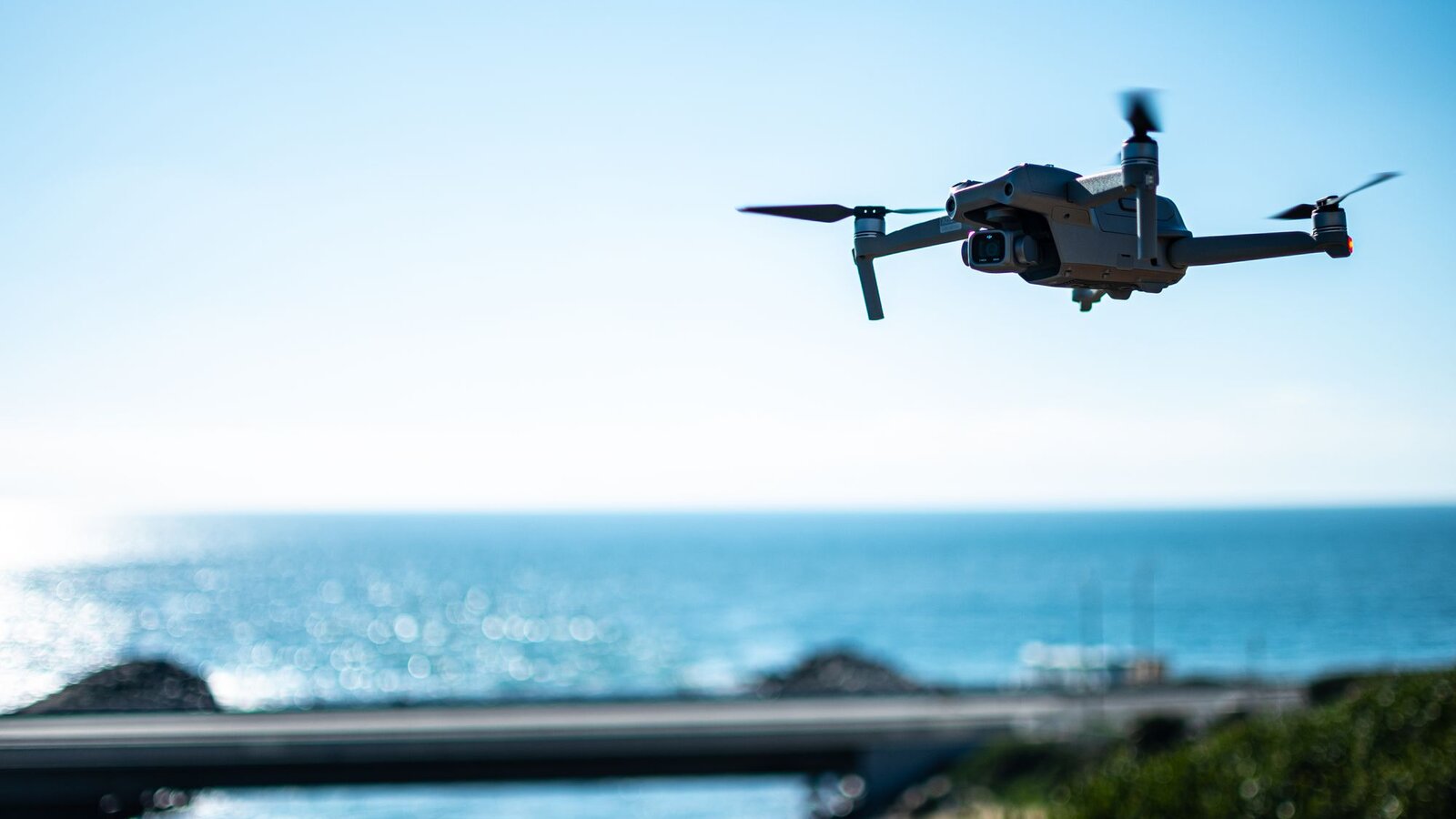
Illustrative image. This guide does not present its own tests of landing pads or accessories.

DroneFlyBlog
Keep exploring the world of drones
Get new buying, aerial photography and drone use guides to prepare for your next purchase or flight.