
In this article
To estimate how much video fits on a drone memory card, you need the free capacity and the recording bitrate. Resolution alone is not enough: two 4K modes can produce different file sizes. Make an estimate before heading out and check it with a small file recorded using the settings you intend to use.
Mbps and MB are not the same unit
Bitrate is usually shown in megabits per second, written as Mbps. File sizes are normally shown in megabytes or gigabytes. As one byte equals eight bits, divide the bitrate by eight to get an approximate number of megabytes per second.
The simplified calculation, using decimal units, is: size in GB = bitrate in Mbps × duration in seconds ÷ 8000. This is an estimate of the data volume and does not guarantee the exact space occupied by a specific file.
In the Mini 4 Pro specifications, DJI lists a maximum video bitrate of 150 Mbps. An advertised maximum does not mean that every second of every recording uses exactly that value. Check the model and mode before using a number in a calculation.
A ten-minute example
Ten minutes is 600 seconds. At a constant 150 Mbps, the estimate is 150 × 600 ÷ 8000 = 11.25 GB. At a constant 100 Mbps, the same period corresponds to 7.5 GB. These two values are calculation scenarios, not measurements from a recording made by the author.
| Bitrate | 10 minutes | 30 minutes |
|---|---|---|
| 60 Mbps | 4.5 GB | 13.5 GB |
| 100 Mbps | 7.5 GB | 22.5 GB |
| 150 Mbps | 11.25 GB | 33.75 GB |
The space shown by your computer may use a different unit convention from the advertised capacity. Formatting, other files and additional data also reduce the available space. Plan based on the free space actually shown, with some margin, and not just the number printed on the card.
Make an estimate using your own file
Record a short clip using the intended settings, in suitable conditions. Measure its duration and note the size of the original. Divide that size by the duration to get the average storage used by that sample. Then multiply by the recording time you expect.
For example, a 900 MB file lasting 60 seconds represents approximately 15 MB per second for that sample. For ten minutes, the projection is 9000 MB. Leave some margin: a different framing or mode may not use exactly the same amount of storage.
Do not use the size of a version sent by message or exported by the editor. Recompression can greatly change the file size, so it may no longer represent the drone’s original recording.
Capacity and speed solve different problems
A card may have enough space and still fail to meet the speed class required by the equipment. The SD Association explains speed classes and the importance of matching the device’s requirements to the symbols on the card.
Before choosing a larger capacity, check the manufacturer’s list of supported cards and limits. Do not conclude that a card is suitable just because its packaging advertises 4K or a high read speed. Write requirements and compatibility also matter for recording.
Prepare the card for the session
Allow for recording time, not just flight time. If you keep the camera recording throughout the operation, storage use will differ from a session with short clips. Also allow space for photographs, panoramic sequences and retakes you may need to make.
Check that the originals are present in your backups before deleting or formatting anything. Identify which cards are empty and which contain material that has not yet been copied. A case with a clear separation between these groups can prevent confusion while travelling.
If the card displays warnings or has unreadable files, deal with the problem first by following the microSD error diagnosis. To copy the material, see QuickTransfer and alternatives; to adjust the mode, review the camera settings.
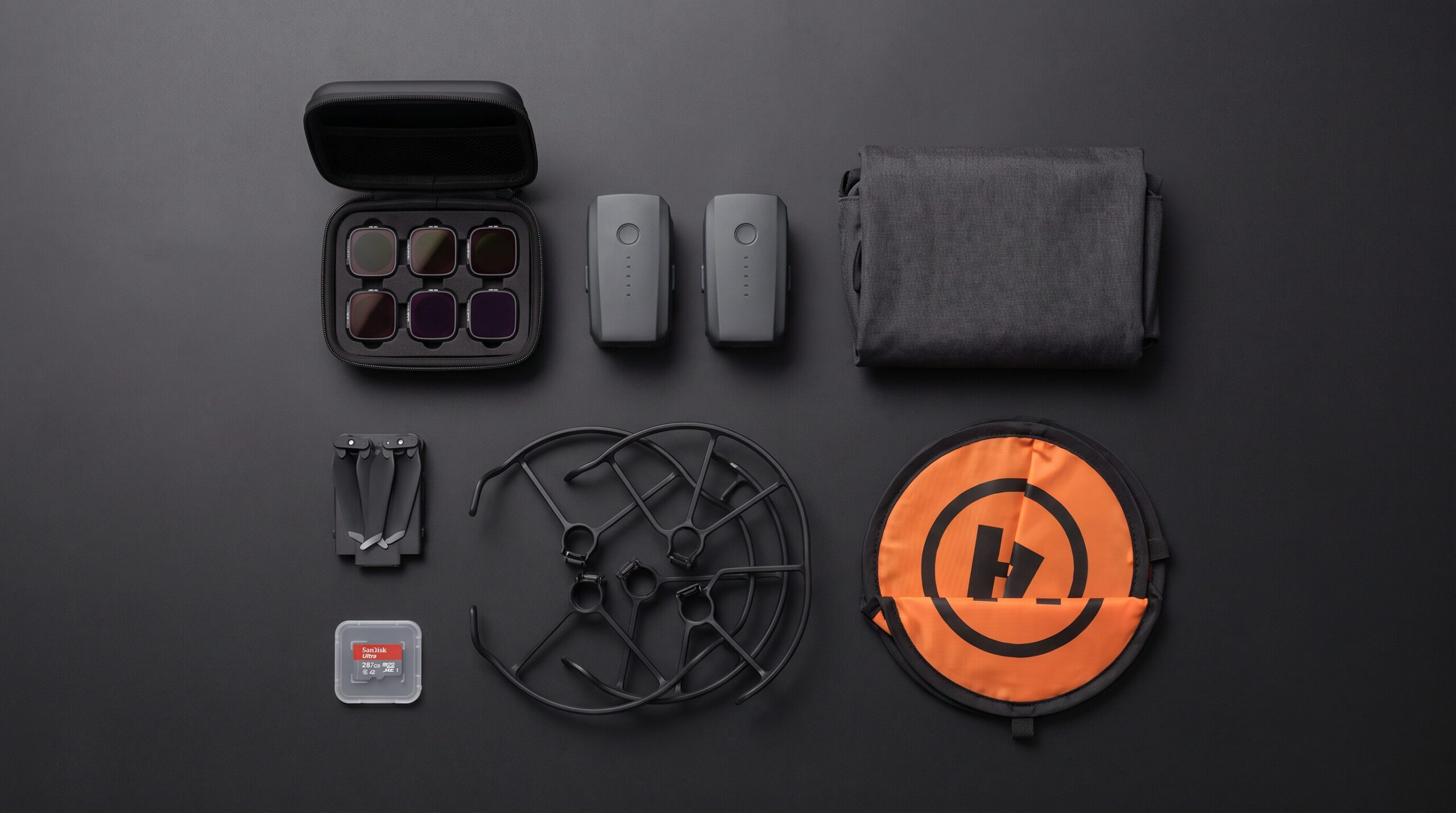
Illustrative image. Values calculated at a constant bitrate; they are not guarantees of recording time.

Compare before buying
DroneFlyBlog
Keep exploring the world of drones
Get new buying, aerial photography and drone use guides to prepare for your next purchase or flight.