
In this article
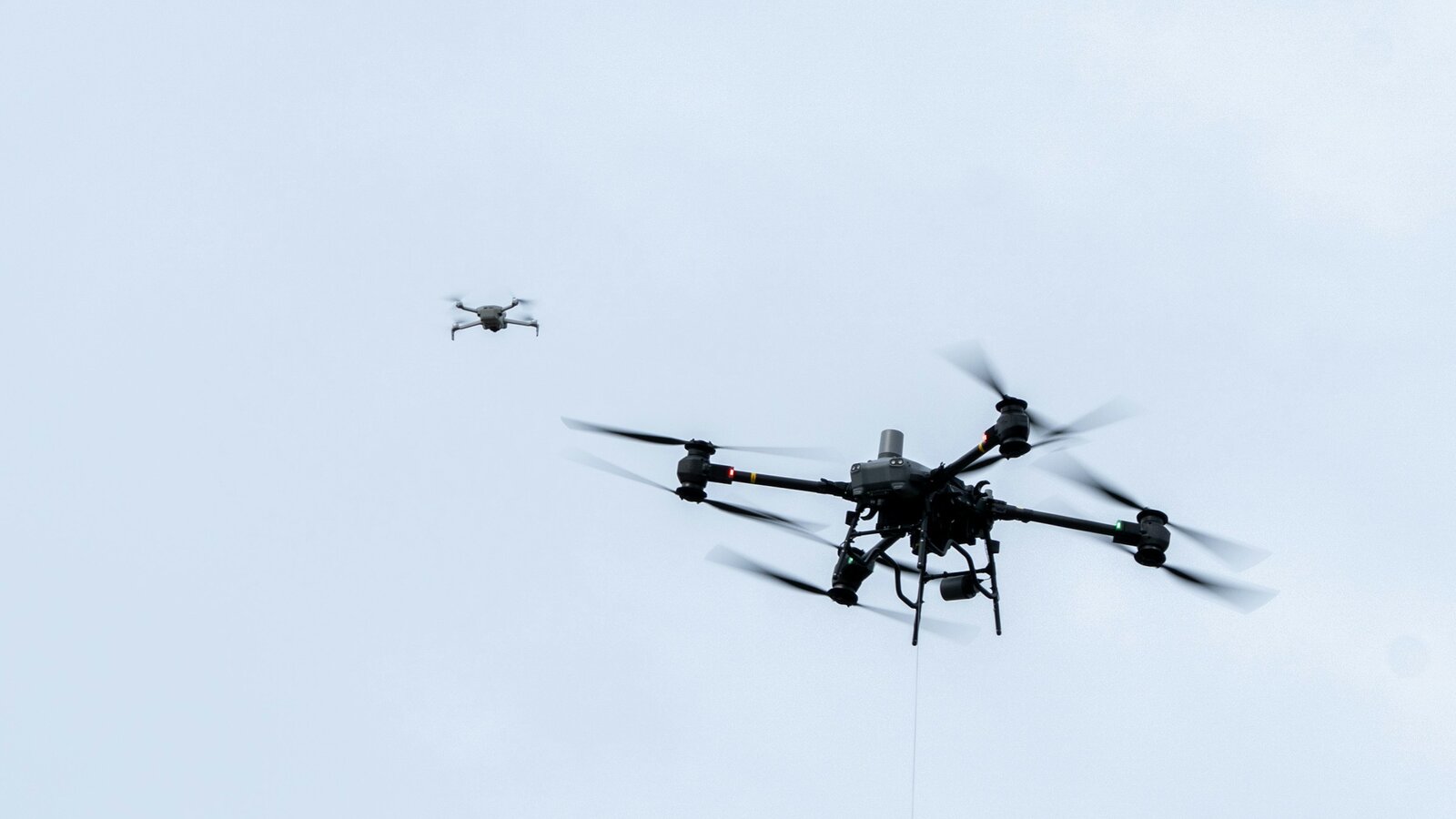
Professional drone or budget drone: which is right for you? The price gap between a €150 drone and a €2,000 one is obvious. What actually changes in between? In this article I compare the two extremes of the drone market, explain what justifies the price difference, and help you decide how much to spend.
The Real Difference Between a Professional and a Budget Drone
Let’s get straight to it. Here’s what changes with price:
| Aspect | Budget Drone (<€200) | Mid-Range Drone (€700-1,700) | Professional Drone (€2,000+) |
|---|---|---|---|
| Sensor | Small, low resolution | 1/1.3″ to 1″ CMOS | 4/3″ or larger |
| Video | Limited 1080p-4K | 4K/60-120fps | 6K/60fps+ |
| Stabilization | Electronic (EIS) | 3-axis gimbal | Advanced 3-axis gimbal |
| Flight time | 10-18 min | 30-45 min | 45-51 min |
| Obstacle avoidance | None or basic | Omnidirectional | Omni + LiDAR |
| Transmission | Wi-Fi (100-300 m) | O4 (10 km) | O4 (10 km+) |
| GPS | Basic or none | GPS + Galileo + BeiDou | Centimeter-level RTK |
| Smart modes | Few or none | ActiveTrack, QuickShots, Waypoints | Full suite + SDK |
| Reliability | Variable, frequent crashes | High, RTH, fail-safes | Professional-grade redundancy |
When a Budget Drone Makes Sense
A budget drone is the right call in these situations:
- First drone: you’ve never flown before and want to try it without spending much.
- Gift for kids: drones in the €30-100 range are fun, educational toys.
- Purely recreational use: casual flying in the backyard or the park.
- Learning to fly FPV: €50-100 micro whoops are a good way to start.
What NOT to expect from a budget drone:
- Gimbal stabilization (you’ll get EIS instead, which is far weaker).
- Image quality good enough for professional use or publishing.
- More than 15-18 minutes of flight time.
- Reliability in wind or rough conditions.
- Obstacle detection that actually works.
The one important exception: the DJI Neo 2 (from around €239) is the most reliable budget drone on the market. It’s from an established brand, has a stabilized 4K camera, and can fly without a controller. If you’re buying cheap, it’s the only one I’d recommend.
When to Invest in a Professional Drone
A professional drone is worth it when:
- You produce professional content: film, advertising, real estate, weddings.
- You work in mapping/surveying: you need centimeter-level precision (RTK).
- You do inspections: wind energy, solar, construction, telecoms.
- Precision agriculture: multispectral monitoring, spraying (in Portugal, aerial application of plant protection products by drone is banned, but fertilizer and seed spreading is not).
- Image quality is your business: sensor quality, dynamic range and resolution matter.
The Sweet Spot: Mid-Range Drones (€700-1,700)
For most people, the best choice sits in the middle. Drones like the DJI Mini 4 Pro (around €689), the Air 3S (around €1,120) and the Mini 5 Pro (from around €809) offer:
- Excellent image quality (4K/60-120fps with gimbal).
- 30-45 minutes of flight time.
- Omnidirectional obstacle detection.
- A full suite of smart modes.
- Reliability and safety (RTH, fail-safes).
- Sub-250g weight on the Mini models, which means fewer legal restrictions in most countries.
My recommendation: if the budget allows, the DJI Mini 5 Pro is the best balance of price and quality in 2026: a 1-inch sensor, 4K/120fps, omnidirectional obstacle sensing, and about 249.9g with the standard battery. Expect to pay between around €809 (with the RC-N3 controller) and around €1,209 (Fly More Combo Plus with the DJI RC 2). If your budget is tighter, the DJI Mini 4 Pro (around €689) is still the most balanced choice.
Frequently Asked Questions
What’s the best professional drone in 2026?
The DJI Mavic 4 Pro, launched by DJI in May 2025, is the best professional consumer drone available right now, with three cameras (the main one Hasselblad-branded, with a 100MP 4/3″ sensor), 6K/60fps video and up to 51 minutes of flight time. The official price starts at €2,139 (with the DJI RC 2 controller).
What’s the best budget drone actually worth buying?
The DJI Neo 2 (from around €239) is the only budget drone I recommend. It has a 4K camera, comes from a trusted brand, and flies without a controller. Generic sub-€100 drones from AliExpress rarely turn out to be worth the money.
What’s the difference between a gimbal and EIS?
A gimbal is a mechanical 3-axis system that physically stabilizes the camera, producing smooth footage even in wind. EIS (electronic image stabilization) is software that crops the image to compensate for shake, which costs resolution and creates artifacts. Serious drones use a gimbal.
Is it worth buying a used drone?
It can be, especially recent DJI models (1-2 years old) with light use. Always check the flight log in the DJI app, battery health, and whether DJI Care Refresh is transferable. Buy only from sellers with a solid reputation.
Conclusion
The difference between a professional drone and a budget drone comes down to sensor, stabilization, flight time, obstacle detection, and reliability. If image quality matters, a mechanical gimbal and a sensor of at least 1/1.3″ are non-negotiable.
For most people, the sweet spot sits between €700 and around €1,700, where you’ll find drones that produce professional-grade content without costing a fortune. Check our full guide to the best drones of 2026 to pick the right model.
You might also be interested in: Best drone for professional filming — drones with D-Log, ProRes, and cinema gimbals.

DroneFlyBlog
Keep exploring the world of drones
Get new buying, aerial photography and drone use guides to prepare for your next purchase or flight.