
In this article
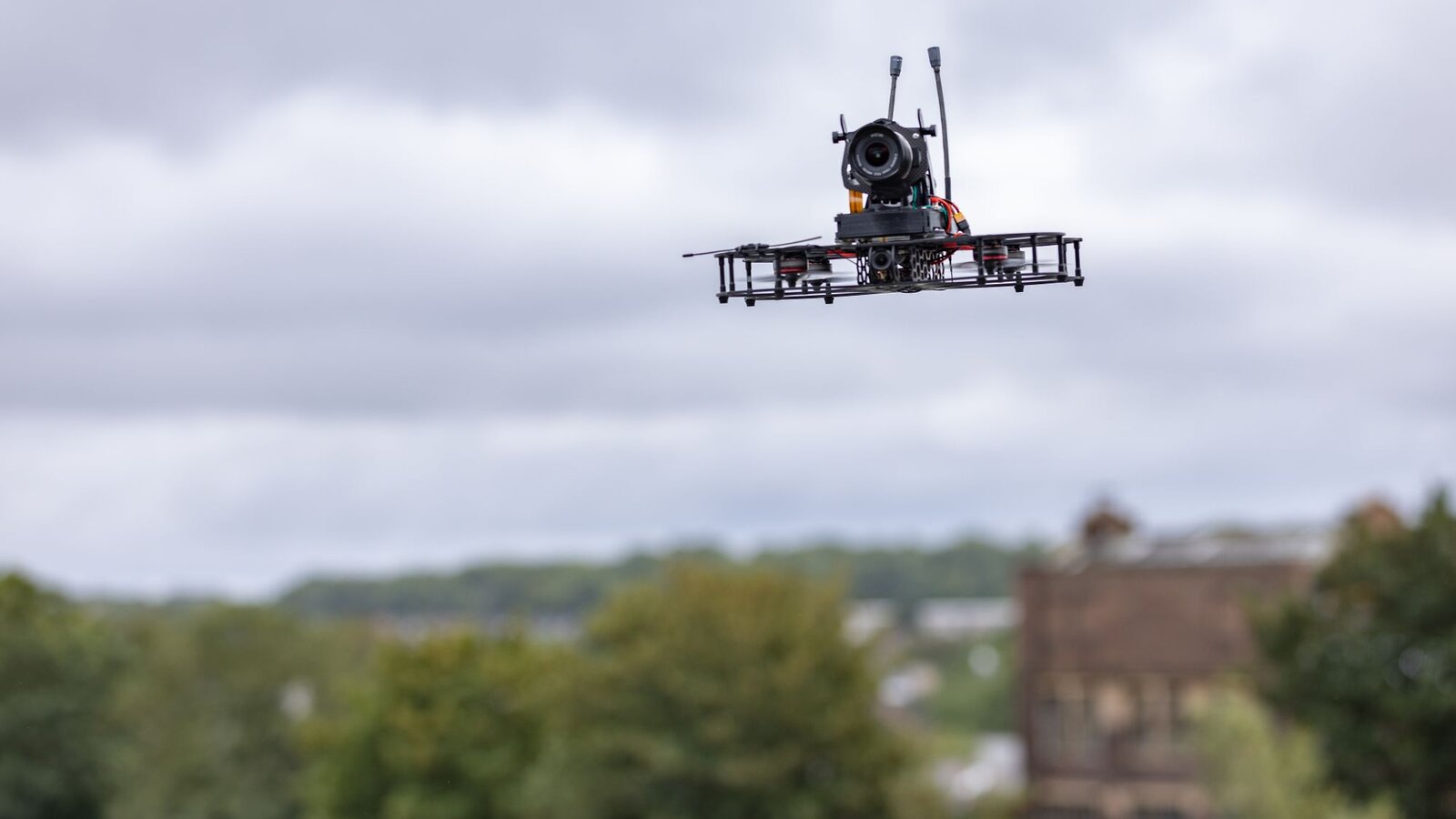
FPV drones are revolutionising the drone world — and in 2026 they’re more accessible than ever. FPV stands for First Person View: you fly the drone as if you were inside it, through goggles that stream the camera feed in real time. It’s the most immersive and thrilling experience you can have with a drone.
In this complete guide, I explain everything you need to know to get started in FPV: what it is, what equipment you need, the best kits for beginners and how to take your first steps without crashing everything within 30 seconds.
What Is an FPV Drone?
With a “normal” drone (like the DJI Mini 4 Pro), you fly by looking at the drone and at the controller screen. With an FPV drone, you wear goggles that cover your vision and show exactly what the drone’s camera sees — as if you were the pilot sitting inside the cockpit.
There are three main categories of FPV drones:
- FPV Racing — pure speed, competitions, obstacle courses
- FPV Freestyle — acrobatics, flips, rolls, creative flying in urban or natural environments
- FPV Cine — smooth cinematic filming, like the chase scenes you see in movies and on YouTube
Equipment Needed to Get Started
To fly FPV, you need more equipment than a regular consumer drone:
| Component | What it does | Estimated price |
|---|---|---|
| FPV drone | The aircraft itself | 100-500 EUR |
| FPV goggles | Show the real-time video feed | 100-700 EUR |
| Controller (radio) | Controls the drone with sticks | 50-300 EUR |
| LiPo batteries | Power the drone (3-5 min each) | 15-30 EUR each |
| LiPo charger | Safely charges the batteries | 30-80 EUR |
| LiPo bag | Safety for charging and transport | 10-20 EUR |
Total budget to get started: 300-1,500 EUR, depending on whether you choose ready-to-fly kits or build your own.
Best FPV Kits for Beginners in 2026
1. DJI Neo (+ Goggles N3) — The Easiest
The DJI Neo is a very straightforward option for trying FPV. It’s not a “true” FPV in the classic sense, but combined with the DJI Goggles N3 and RC Motion 3 controller, it offers an accessible FPV experience: the DJI Neo Motion Fly More Combo costs 449 EUR at DJI’s European store. Ideal for those who want to taste the experience without committing to a full setup.
2. EMAX Tinyhawk III Plus RTF Kit — Best Complete Kit
The Tinyhawk III Plus RTF (Ready to Fly) kit includes the drone, goggles and controller, and costs 314.99 USD at EMAX’s official US store, with an analog or digital (HDZero) video version at the same price. It’s a micro drone (whoop) perfect for flying indoors without destroying furniture. The build is robust enough to survive the inevitable beginner crashes.
3. BetaFPV Cetus X Kit — Best for Learning
The Cetus X has a beginner flight mode with auto-levelling and speed limits, and a manual mode for when you gain confidence. It’s a whoop with analog video (C04 camera and VR03 goggles) that works very well indoors. Price: 309.99 USD at BetaFPV’s official store.
4. DJI Avata 2 — Best Cine FPV
If your goal is cinematic FPV filming (not racing), the DJI Avata 2 is the best option. 4K/60fps stabilised camera, downward and backward visual positioning (it has no obstacle detection) and compatibility with DJI Goggles 3. Price: 409 EUR for the drone only, 619 to 1,019 EUR in the combos, at DJI’s European store. It’s the most “beginner-proof” FPV on the market.
Step Zero: Start with a Simulator
This is the most important advice I can give you: before flying a real FPV drone, practise on a simulator. FPV is very different from flying a consumer drone — crashes are guaranteed and each crash can cost 50-200 EUR in parts.
The best FPV simulators in 2026:
- Liftoff — the most realistic, available on Steam (~20 EUR)
- Velocidrone — favourite among racing pilots (licence at 16.99 GBP on the official website)
- DRL Simulator — cheap on Steam (around 8 EUR), good introduction
- Uncrashed — impressive graphics, great for freestyle
You only need the simulator and an FPV controller (which you’ll then use with the real drone). Practise 10-20 hours before flying outdoors — you’ll save hundreds of euros in broken parts.
FPV Safety Tips
- Spotter is mandatory — in the EU, when flying with FPV goggles, you need someone beside you who maintains visual line of sight with the drone
- LiPo batteries are dangerous — always charge them in a LiPo bag, never leave them unattended during charging, and dispose of them properly if they’re swollen
- Propellers cut — the propellers on a 5″ FPV drone spin at thousands of RPM and can cause serious injuries. Always disarm the drone before approaching it
- Start with whoops — indoor micro drones are the safest (and cheapest) way to learn
FPV Regulations in Portugal
The rules for FPV drones in Portugal follow the general drone legislation, with one important addition: since you fly with goggles, you don’t have direct visual line of sight with the drone. European regulations require an observer (spotter) beside you who maintains visual contact with the drone and warns you of hazards.
FPV drones without a class label (C0 to C4), such as self-built ones, fall into subcategory A3 if they weigh 250 g or more: flying at least 150 metres from residential, commercial, industrial or recreational areas. Below 250 g they can, as a rule, fly in subcategory A1.
Frequently Asked Questions About FPV Drones
How much does it cost to get started with FPV?
A complete beginner kit (micro/whoop drone + goggles + controller) costs around 260 to 315 USD at the official EMAX and BetaFPV stores, and the DJI Neo Motion Fly More Combo costs 449 EUR. For 5-inch FPV with quality digital goggles, the investment rises to 800-1,500 EUR.
Is FPV hard to learn?
Yes, the learning curve is steeper than consumer drones. Manual mode (acro) has no auto-levelling — if you let go of the sticks, the drone doesn’t stop. With 10-20 hours in a simulator, most people can fly with basic confidence.
Do I need a licence to fly FPV in Portugal?
The same rules as consumer drones apply. You need ANAC registration, and since you fly with goggles, you need a spotter beside you who maintains visual line of sight with the drone.
Can I film in 4K with an FPV drone?
Yes, drones like the DJI Avata 2 film in 4K/60fps with stabilisation. Freestyle FPV drones typically mount a GoPro or separate action camera to record in high resolution, while the goggles receive a lower-resolution video feed with minimal latency.
Conclusion
FPV drones offer a flight experience that no consumer drone can match. The sensation of flying in first person, whether in high-speed racing or cinematic filming between buildings, is unique and addictive.
If you’re thinking about getting started, invest first in a simulator + controller, then in an indoor micro/whoop kit, and only then move on to larger FPV drones. Patience at the beginning saves you hundreds of euros in broken parts.
To choose the right drone for you, check out our complete guide to the best drones of 2026.
You might also be interested in: Best FPV drone in 2026 — the 5 best for racing, freestyle, and cinema.

DroneFlyBlog
Keep exploring the world of drones
Get new buying, aerial photography and drone use guides to prepare for your next purchase or flight.